 Event
EventExhibition "Rooms"
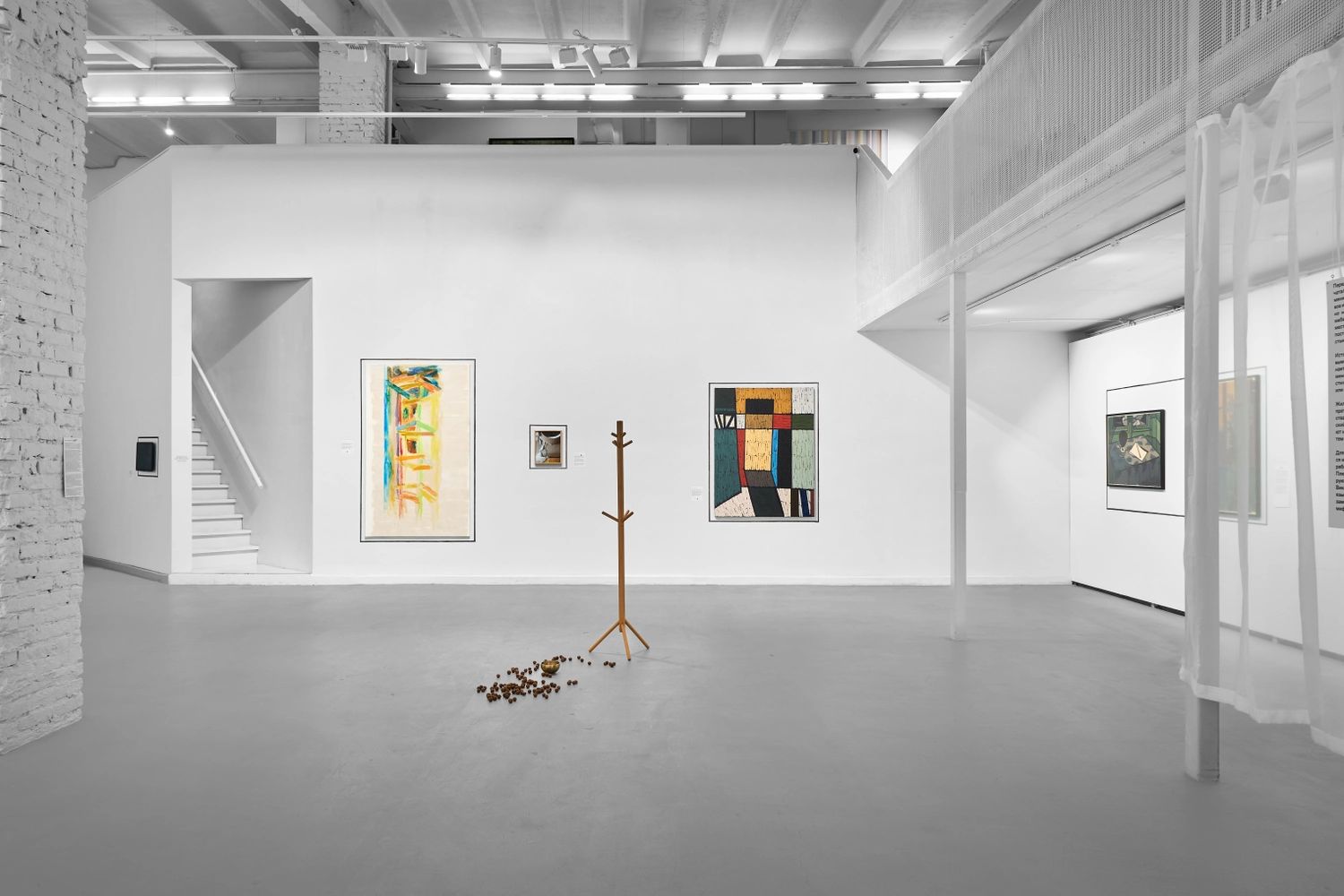
The house here becomes a personal archive, a stage of everyday life, and a point from which the artist looks at the world. The works connect real interiors, memories, and imaginary spaces in a journey through different eras and countries. The exhibition is arranged as a sequence of 19 rooms linked to specific addresses and biographies. The Soviet kitchen, a village house, a parental apartment, and temporary housing appear in paintings, graphics, photography, video, and installations. The domestic environment holds traces of habits, relocations, close relationships, and historical circumstances. Nikolai Kasatkin notices his own reflection in the window of a house in the village of Vorontsovo, where he came every summer for 13 years. Mikhail Roginsky recalls his parents' Moscow apartment after emigrating to France. Irina Nakhova shows the home of an unofficial artist as a refuge and simultaneously a closed space. Polina Rukavichkina explores the boundary between the familiar and the foreign. The project also includes previously unseen works by Evgeny Mikhnov-Voytenko, works by Vladimir Kupriyanov from the 1980s, early experiments by Vitaly Pushnitsky and Olga Tatartseva. Individual pieces were created specifically for the exhibition by Mikhail Levius, Alexander Mortaev, Vika Begalskaya, and Alexander Wilkin. More than 20 works trace the moment when a familiar interior ceases to be a background. A door, a window, furniture, or an empty corner become a way to speak about memory, freedom, solitude, and the feeling of home. Entertainment in Moscow is collected on KUDAGO.
Similar upcoming events